

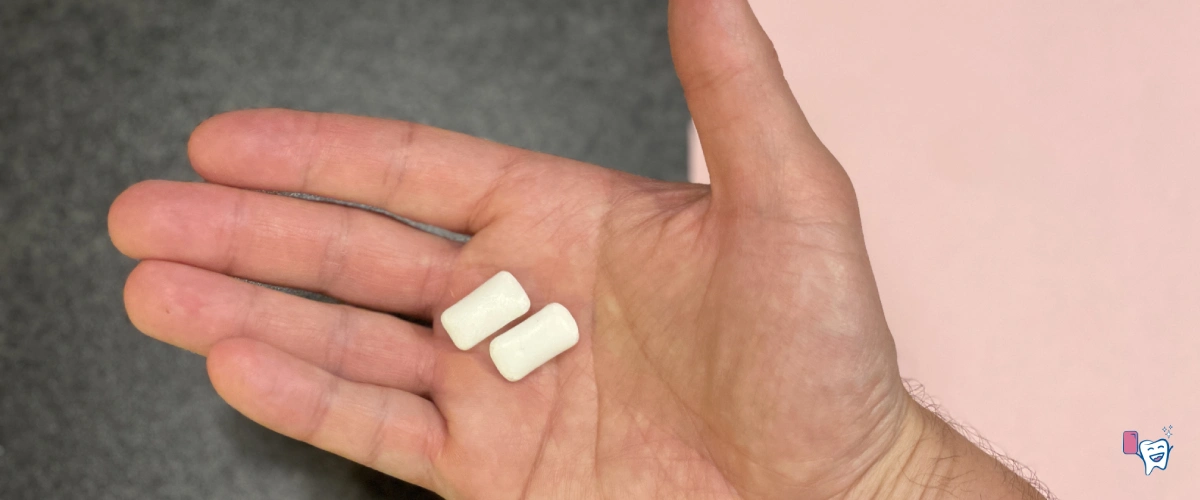
Chewing gum has a long and interesting history. People of all ages around the world enjoy chewing gum to pass the time, freshen their breath, or simply for the taste. It is generally believed that chewing gum has no negative effects on health. However, this is not entirely true. If you pay attention to a few things, you can enjoy chewing gum without side effects and take full advantage of its potential. Nowadays, it is important to know what your favorite chewing gum contains. In this article, we will focus on the gum base, some common chewing gum ingredients, and explain why it is important to know what you are chewing. We will also highlight key ingredients that you should avoid when buying chewing gum.
| Common Ingredients in Chewing Gum | What to Avoid in Chewing Gum | Potential Health Concerns | Wrapping it Up | References |
Common Ingredients in Chewing Gum
The composition of chewing gum varies greatly today, but it usually contains a gum base, sweeteners, flavorings, softeners, preservatives, and colorings.
1. Gum Base (rubber base)
The gum base (chewing gum base/chewing gum/rubber base, etc.) gives the gum its chewable consistency. It is usually a mixture of elastomers, resins, fats, emulsifiers, and waxes. These ingredients provide a structure that allows the gum to be chewed. In addition, it works for a long time without breaking down. There are three types of chewing gum bases:
- a gum base with plastic materials (most commonly used in chewing gum—commonly available chewing gum contains this),
- a plastic-free version—i.e., a gum base without plastic materials (for example, Xylichew chewing gum), and
- a natural gum base (natural chewing gum—Gud Gum and The Humble Co.).
The choice of which gum to chew is always up to you. However, it is useful to have information about what different types of gum may be made of. Different gums—whether with a conventional gum base, alternative synthetic blends, or a natural gum base—may release certain components when chewed. It has long been believed that chewing gum with plastic or synthetic polymers is completely inert (unchanging). However, some newer findings, such as a pilot study from 11/2025 [0], suggest that certain components of the gum base may be mobile during chewing or may be partially released. What this may mean for human health will likely require further research.
It is therefore advisable to be informed and read the ingredients on the packaging of your favorite chewing gum. If the ingredients list includes the general term “gum base,” this usually means a mixture of several substances, which may include synthetic polymers (plastic materials). However, the specific composition may vary depending on the manufacturer.
2. Sweeteners
Today, chewing gum is sweetened with various sweeteners, including sugar, artificial sweeteners, and natural sweeteners. Sugar is used in the form of sucrose or glucose. It provides sweetness but also contributes to dental problems such as tooth decay. Artificial sweeteners, such as aspartame (E951), sorbitol (E420), and sucralose, offer sweetness without added calories. However, artificial sweeteners are often linked to oral health issues. Therefore, the best alternative is to use natural sweeteners, such as xylitol and stevia.
3. Flavorings
Flavorings give chewing gum its distinct taste. These can be natural or artificial. Natural flavors are derived from sources like fruits, mint, or spices, while artificial flavors are synthesized in a lab to mimic natural flavors. Mint, fruit, and gum are some common flavor options [1].
4. Softeners
Softeners are added to chewing gum to enhance its texture and make it easier to chew. Some softeners used in chewing gum include Glycerol, vegetable oil, and lanolin. These ingredients are added because they prevent the gum from becoming too hard or brittle.
5. Preservatives
Preservatives are added to extend the shelf life of chewing gum. They prevent the growth of mold and bacteria. Commonly available chewing gums typically contain BHT (butylated hydroxytoluene) and BHA (butylated hydroxyanisole). However, these substances may have adverse health effects. When buying chewing gum, we recommend reading the list of ingredients on the package to check whether it contains potentially harmful substances.
6. Coloring Agents
Food coloring is used to give chewing gum its bright colors. These colors can be natural or artificial. While natural food coloring comes from plants, fruits, or vegetables, artificial food coloring is produced synthetically. To put it simply, manufacturers often use colorants to attract more customers. By coloring chewing gum or a lollipop blue, the treat becomes much more appealing to children. It’s important to note, however, that these colorants are labeled as potentially harmful to health.
These include, in particular, the following dyes, which do not need to be in chewing gum at all:
- carmine (E120),
- brilliant blue FCF (E133),
- Allura Red AC (E129).
What to Avoid in Chewing Gum
High Sugar Content
Chewing gum with high sugar content can cause dental issues like cavities and tooth decay. This happens when bacteria in the mouth feed on sugar from gum, they produce acids that erode tooth enamel. Opting for sugar-free gum or gums with natural sweeteners can help reduce this risk [2].
Why you need to use Chewing Gum without Aspartame
Some chewing gums use artificial sweeteners like aspartame, sucralose, saccharin, sorbitol, maltitol, or mannitol. They provide sweetness without the calories. However, these sweeteners have been linked to controversial health effects. There are concerns about their impact on metabolism, and gut health. Choosing gums with natural sweeteners like stevia, erythritol or xylitol may be a safer alternative (These gums are often referred to as Aspartame Free Chewing Gum. But always take into account that they should contain especially these healthy alternatives exclusively, but not in a mix with other low-quality synthetic sweeteners such as the already mentioned sorbitol, maltitol, mannitol, etc. and not even in small quantities).
It is often stated that these are xylitol chewing gums, but xylitol accounts for only 5 % of the chewing gum, and the rest is sweetened with cheap synthetic sweeteners that may not be beneficial to your health.
Synthetic Flavorings with Potential Allergens
Synthetic flavorings are often used in chewing gum without aspartame to create a variety of appealing tastes. While they range from fruity to minty in taste, these artificial flavorings may contain allergens or trigger sensitivities in some individuals.
Additives Linked to Health Risks
Certain additives commonly found in chewing gum have been linked to health risks. For instance, preservatives like BHT (butylated hydroxytoluene) and BHA (butylated hydroxyanisole) have raised concerns due to their possible association with health issues like cancer and hormonal disruptions. Similarly, some colorings used in gums may have adverse effects on health. Avoiding gums with these additives or choosing alternatives is the right strategy.
Potential Health Concerns
- Plastic materials contained in the gum bases of commonly available chewing gum dissolve in the body when chewed, which can have an adverse effect on the entire digestive system. Read the packaging and decide whether to chew commonly available chewing gum or healthy alternatives that do not contain plastic materials.
- Sugar in chewing gum can contribute to tooth decay and cavities. This happens because bacteria in the mouth feed on sugar, producing acids that erode tooth enamel [3].
- Artificial sweeteners impact metabolism, and gut health, and even have carcinogenic properties.
- Synthetic flavorings used in chewing gum may contain allergens that can trigger sensitivities or allergic reactions. Ingredients like artificial fruit flavors may contain compounds that mimic natural flavors but could also cause allergic reactions in susceptible individuals.
- BHT is used as a preservative in chewing gum to extend shelf life by preventing the growth of mold and bacteria. However, it has been linked to cancer and hormonal disruptions.
- Aspartame is an artificial sweetener used in sugar-free chewing gum as a low-calorie alternative to sugar. As of 7/14/2023, Aspartame has been classified as a “potentially carcinogenic substance” (group 2B) by the World Health Organisation [4]. Regulatory agencies like the FDA have deemed aspartame safe for consumption within recommended limits, but concerns persist among some consumers regarding its possible long-term effects. Thus, it is advisable to use Chewing Gum without Aspartame.
Wrapping it Up!
If you know that there are chewing gums with plastic materials on the market, but also healthier alternatives, you can decide to avoid those that pose a potential risk to your body. It is good to read the ingredients on the packaging and decide according to your own preferences.
If you know what your aspartame-free gum contains, you can make better decisions about your life. Gum containing sugar should be avoided because it contributes to excessive calorie intake and causes dental problems. Gum with artificial sweeteners affects hormonal health, and preservatives also have a negative impact on health. Therefore, always check labels carefully and choose healthier gum (healthy gum alternatives). You can browse our collection of healthy chewing gums, which we hold to high quality standards!
References
[0] Ingestion of microplastics during chewing gum consuption – https://www.sciencedirect.com/science/article/pii/S2666911025000243
[1] Hazards of flavoring agents – https://www.ncbi.nlm.nih.gov/pmc/articles/PMC5573534/
[2] Effect of sugar-free and sugar-containing gums – https://www.ncbi.nlm.nih.gov/pmc/articles/PMC3469898/
[3] Sugar-free chewing gums and dental caries – https://www.ncbi.nlm.nih.gov/pmc/articles/PMC4327235/
[4] Aspartame has been classified as a “potentially carcinogenic substance” by WHO – https://www.who.int/news/item/14-07-2023-aspartame-hazard-and-risk-assessment-results-released.